
Know Before You Owe | Mortgages
The CFPB’s mortgage initiative is designed to help consumers understand their loan options, shop for the mortgage that’s best for them, and avoid costly surprises at the closing table.
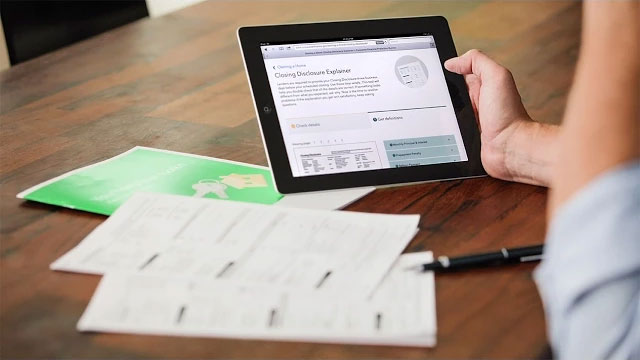
Making the mortgage process easier
The Know Before You Owe mortgage disclosure rule replaces four disclosure forms with two new ones, the Loan Estimate and the Closing Disclosure. The new forms are easier to understand and easier to use. The rule also requires that you get three business days to review your Closing Disclosure and ask questions before you close on a mortgage.
Tools and resources
Mortgages can be complex and confusing. To supplement the rule, we’ve created several resources to help you as you navigate the mortgage process.
Sample Loan Estimate
The Loan Estimate makes it easier to shop around and compare loan offers from multiple lenders. Our interactive sample form will help you double check the details and get definitions for terms used on the Loan Estimate.
Sample Closing Disclosure
The Closing Disclosure helps you avoid costly surprises at the closing table. Use our interactive sample form to help you compare your Loan Estimate to the Closing Disclosure and make sure that you understand the reason for any differences.
Buying a House
This suite of tools and resources guides you through the process of getting a mortgage. It will help you explore interest rates in your area, understand loan options, and prepare you for closing.
Your Home Loan Toolkit
This booklet takes you from budgeting to closing with worksheets, checklists, and conversation starters. You’ll get a copy when you apply for a home purchase mortgage, but you can also download a copy now.
Resources for professionals
Mortgages can be complex and confusing. To supplement the rule, we’ve created several resources to help you as you navigate the mortgage process.
Mortgage professionals
Since 2013, we have been working with lenders, creditors, compliance officers, software companies, and other groups to prepare for implementation of the rule.
Housing counselors
Assist consumers as they navigate through the new mortgage process. Educate your clients on the new disclosures and timing requirements with our tools and resources.
Media
We have created resources to help you understand and tell the story of the CFPB’s Know Before You Owe mortgage initiative, which has been a focal point of the Bureau since its start.
Creating new mortgage disclosures
Why we created new disclosures
The Consumer Financial Protection Bureau (CFPB) is a government agency built to protect consumers. We help keep banks and other financial service providers consumers depend on every day operating fairly.
After the housing crisis, Congress directed us to combine existing federal mortgage disclosures: the initial Truth–in-Lending disclosure with the Good Faith Estimate and the final Truth-in-Lending disclosure with the HUD-1 Settlement Statement. These disclosures had overlapping information and complicated terms, which made them hard for borrowers to understand and for lenders to explain.
How we created new disclosures
We involved the people who will actually use the new forms—consumers, lenders, mortgage brokers, settlement agents—in helping to combine and improve them. After several rounds of qualitative testing, we found that users were able to see the difference between prices on their Loan Estimate to those quoted on the Closing Disclosure and they were able to identify costs they could shop for, among other findings.
To be sure that the Loan Estimate and the Closing Disclosure are easier to use and understand than the existing forms, we tested them in a quantitative validation study. Participants provided more correct answers about a sample mortgage using the new forms than they did using the previous forms.
Timeline
Read the timeline to understand the process of how this rule and our work around it has developed since the CFPB’s beginnings.